
Underground Utility & Directional Boring Contractors.
Trenching, boring, conduit, and duct banks installed by in-house crews across Wisconsin.
WIL-Surge Electric is an underground utility contractor for general contractors, owners, and municipalities across Wisconsin. Our in-house crews handle trenching, directional boring, and conduit installation for power, communications, and water lines, on private sites and public projects alike. Because we also self-perform the electrical scope, the conduit in the ground is planned by the same team that carries the work through to final terminations.
Underground work comes first on most sites. Getting utilities in the ground correctly, before foundations, paving, and vertical work start, keeps every trade that follows on schedule.
Trenching & Backfill
Our crews open trenches for electrical feeders, communications conduit, and water lines, then backfill them so the surface above is ready for paving, landscaping, or the next trade. Lines are routed safely and inspected tight before the trench is closed.
Wisconsin ground brings its own challenges. We plan depth and routing around the frost line so buried lines hold up through freeze-thaw cycles, and we account for the soil and groundwater conditions that affect how a trench is dug, supported, and backfilled.
Open trenches are protected. Our crews work under a written trench box safety plan, using trench boxes and shoring to keep the people doing the work safe while the trench is open.
Directional Boring
When an open trench isn't the right answer, directional boring installs conduit underground without cutting open the surface along the route. It keeps disruption above ground to a minimum while getting power and communications lines where they need to go.
We own our directional boring rigs, so our crews can bore under roads, driveways, and parking lots without tearing up pavement or closing the surface above.
Conduit & Duct Banks
We handle conduit installation for underground power and communications, from single runs to concrete-encased duct banks that carry multiple feeders between buildings, transformers, and switchgear. Duct banks are laid out with the electrical design, so the conduit in the ground matches the system it serves.
Those duct banks often feed the switchgear and distribution equipment installed by our power distribution crews, so one team is accountable from the trench to the energized gear.
Utility Coordination & Locating
Before we dig, we call in Digger's Hotline (Wisconsin 811) tickets so existing utilities are marked, and we coordinate routing and schedule with owners, general contractors, and utility companies.
Where existing lines run close to the work, non-destructive hydro excavation exposes them so crews can confirm their location without the strike risk of mechanical digging.
Planning Conduit Routes & Depth
Good underground work is settled on paper before the first trench is opened. A conduit route has to connect the point where power or communications start to the equipment they serve, while staying clear of existing utilities, future building footprints, and areas set aside for paving or landscaping. Straighter runs with fewer bends are easier to pull cable through, and spare conduit placed while the ground is open can leave room for future loads without digging the site up again.
Depth follows the same thinking. How deep a line is buried depends on what it carries, what sits on the surface above it, and the design and code requirements for the project, along with the frost and soil conditions every Wisconsin site brings. We set each run from the electrical design rather than from habit, so conduit ends up where the system it serves needs it.
On design-build work, our Design / BIM specialists model the electrical scope, which helps catch conflicts between underground electrical routes and other work before they turn into change orders in the field.
As-Built Records & Site Scheduling
Once a trench is backfilled, the only way to know exactly what is underneath is the record kept of it. Accurate as-built information, showing where each line actually runs rather than where the plans first placed it, helps owners and future contractors avoid strikes and plan additions years later. Locate marks may not cover every privately owned line on a site, so good records matter long after the project closes out.
Underground work also has to fit a site schedule that is moving around it. Trenches need to be opened, inspected, and closed before foundations, slabs, and paving can go in over them, and conduit stub-ups have to land where concrete crews are forming pads. Because our earthwork and concrete crews work for the same company, those handoffs are planned together instead of negotiated between separate subcontractors.
For general contractors, that means fewer trade-stacking conflicts early in the job, when the site is at its most crowded and a late underground change can delay every trade that follows.
Projects
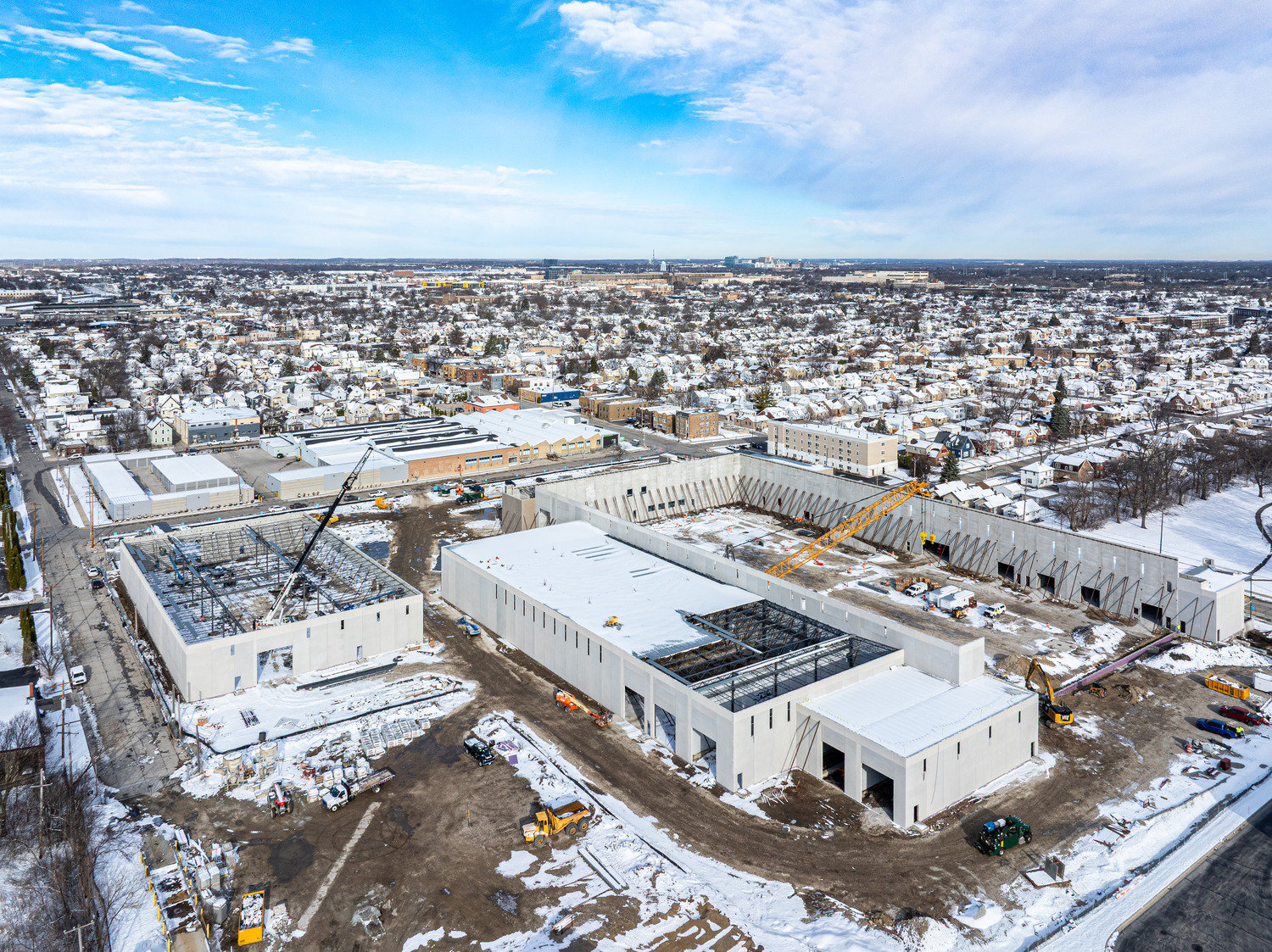
Complete electrical construction for the 310,000+ ft² West Allis DPW campus, including main service and distribution, repair- and wash-bay wiring, and high-efficiency lighting for office, IT, and site infrastructure.
At the West Allis DPW campus, our scope ran from main service and distribution to site infrastructure, delivered by the same in-house crews. See more in our projects portfolio.
Request a Bid
Tell us your project scope, location, and timeline through our request a quote page. Our estimating team reviews the details and responds with next steps for bidding, with the underground work scoped alongside the other trades we self-perform.
Explore our full commercial electrical services or see all 17 trades.
Plan your underground utility work.
Preconstruction support, budgeting, and design-build expertise, from a partner who self-performs the work.