
Waukesha County Courthouse Renovation
Electrical, lighting, fire alarm, and low voltage work phased around a courthouse that stays open.
Project Overview
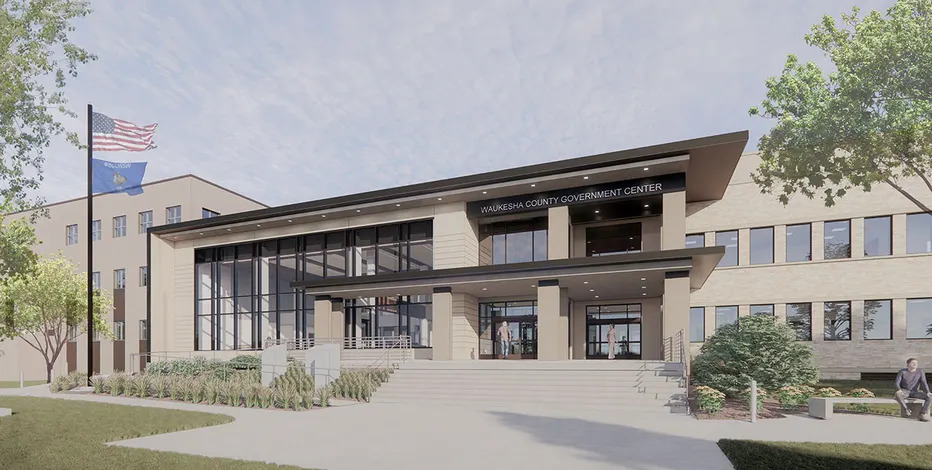
A 151,000 ft² occupied renovation, underway since 2023, with electrical, lighting, fire alarm, and low voltage work phased around a courthouse that stays open.
The Waukesha County Courthouse, in our headquarters' home county, stays occupied throughout the renovation. WIL-Surge Electric is delivering modern power distribution, efficient lighting, fire alarm, and low voltage systems while the building stays in daily use.
- Location
- Waukesha, WI
- Owner
- Waukesha County
- General contractor
- Gilbane
- Size
- 151,000 ft²
- Status
- Underway since 2023
- Condition
- Occupied throughout
- Our scope
- Electrical, lighting, fire alarm, and low voltage
Occupied-Renovation Approach
A courthouse can't close for construction. Our crews phase the electrical work and sequence it around the building's daily operations, so the courthouse keeps running while the systems behind it are upgraded. It's the same way we plan work in any building that has to stay open, from county facilities to clinics and schools.
Challenges & Solutions
Ceiling space was the biggest constraint. The courthouse's ceilings left little room for new feeders alongside everything else that has to run through them. When our crews discovered crawl tunnels beneath the building, we designed a plan to install the new feeders under the existing building instead.
Routing the feeders through the tunnels simplified installation and freed up ceiling space for other MEP equipment, the kind of problem-solving our design-build and preconstruction team brings to occupied renovations.
Trades Self-Performed
Our in-house crews carry the work: modern power distribution, efficient lighting, and the fire alarm and low voltage systems for a building the county depends on.
Keeping those scopes with one contractor means one schedule and one point of contact for the county through every phase of the work.
Why Phasing Matters in Buildings That Stay Open
Some public buildings simply can't close. Courts, county offices, and similar facilities serve residents every business day, so a renovation has to happen around the people using the building instead of in place of them. In general, phasing breaks a large renovation into smaller areas of work that can be completed, tested, and returned to service one at a time.
For electrical and mechanical systems, that approach matters even more. Power, lighting, heating, and cooling reach every floor, so a single change can affect spaces far from the work area. Careful phasing keeps critical systems live, limits planned shutdowns to short, coordinated windows, and uses temporary power where needed so occupied areas keep running while new equipment is brought online.
Planning an Occupied Renovation
Public owners planning an occupied renovation generally benefit from settling a few things before work begins: which systems must stay in service at all times, how building staff will be notified ahead of any shutdown, and which departments need the least disruption. A clear phasing plan shared with the people who work in the building keeps surprises to a minimum, and a long renovation benefits from a plan that can adjust as building needs change.
Communication carries the plan through construction. Regular check-ins with facility staff, advance notice of any work that affects a department, and a contractor who keeps electrical and mechanical crews on the same schedule all help an occupied building stay productive. Owners should also expect updated documentation as work wraps up, so maintenance staff know exactly what changed.
Related Services
The Courthouse anchors our work in Waukesha County, where WIL-Surge Electric is headquartered. See our commercial contractors in Waukesha, or explore the services behind occupied renovations like this one:
- Commercial electrical services
- Fire alarm & low voltage systems
- Select demolition for occupied facilities
Have a project like this one? Request a quote, or browse all our projects.
Have a project like this one?
Preconstruction support, budgeting, and design-build expertise, from a partner who self-performs the work.